




Most companies have books. Few have a month that closes.
The difference is whether, on a known working day, someone can say the month’s numbers are complete, reconciled and reviewed, and hand you a pack that is true. Finac closes every client’s month on a fixed working day, 10, 7, 5 or 3 depending on the engagement, and locks it.
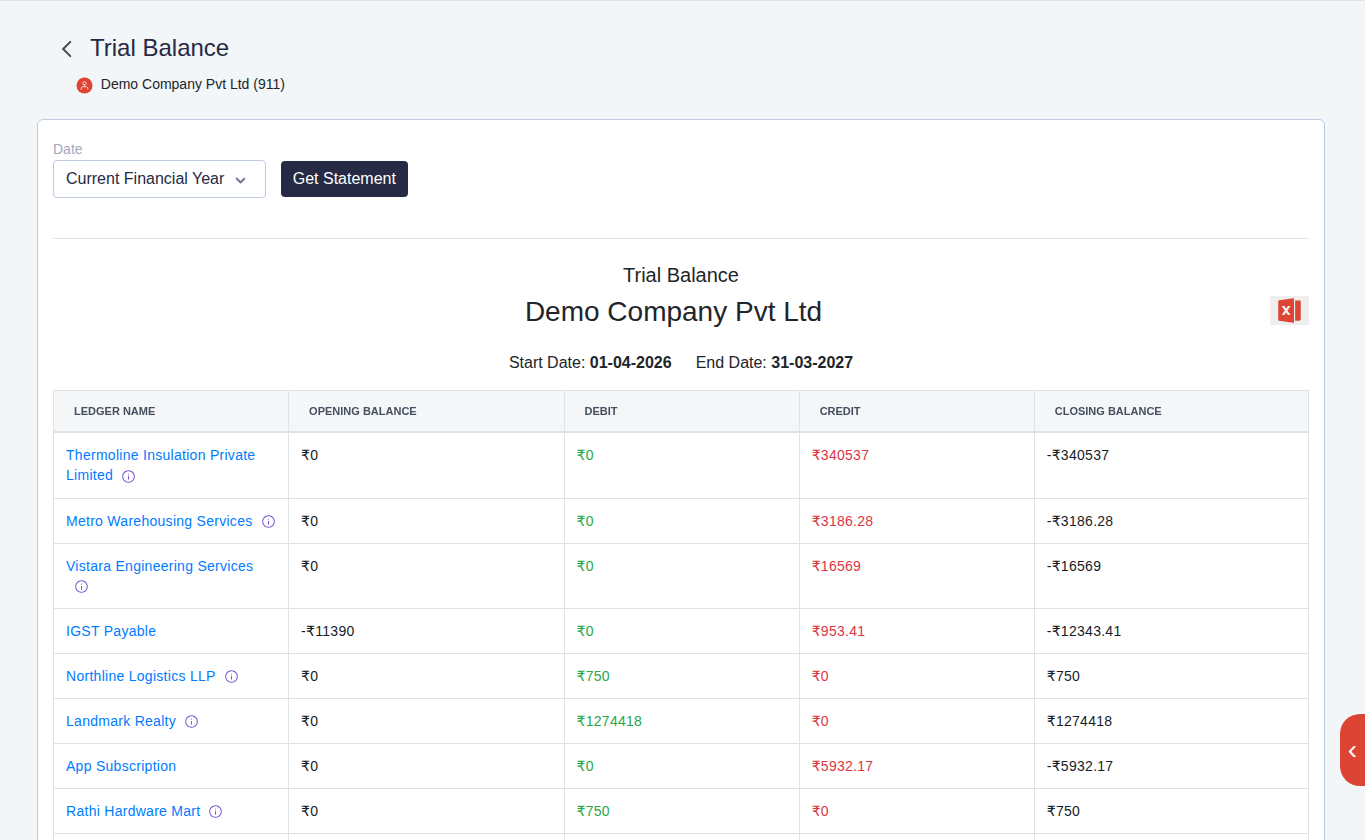
Ten steps, in order, every month
A close is a sequence, not a report. Each step depends on the one before it, which is why a close done in the wrong order produces a pack that changes the following week.
| Step | What is done | Why it matters |
|---|---|---|
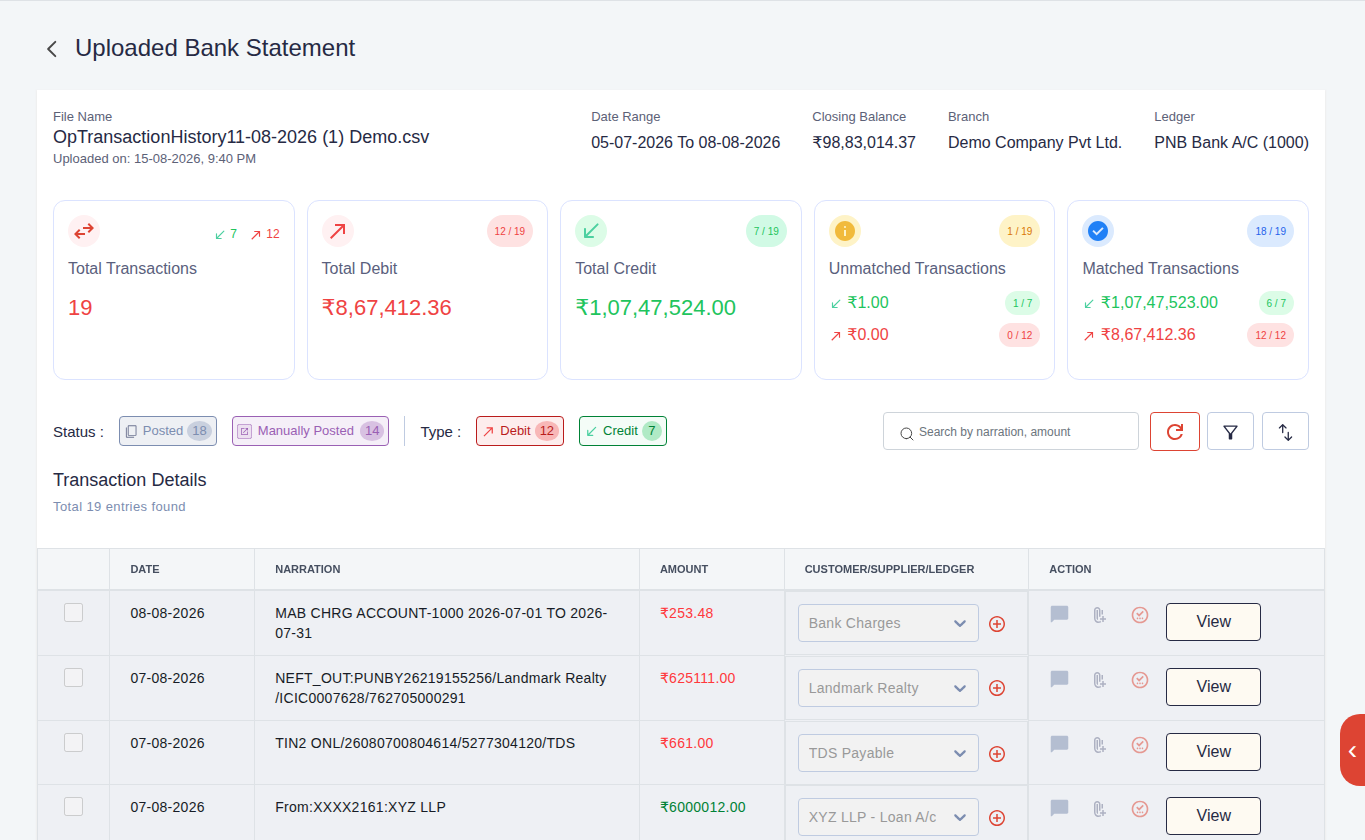
| Bank | Every account reconciled to the statement; unmatched items resolved or listed with an owner | Cash is the one number that cannot be argued with |
| Suspense | Cleared to zero or explained line by line | A growing suspense is the first sign a business is losing hold of its books |
| Sales and receivables | All invoices issued and posted; credit notes; ageing reviewed; doubtful debts provided | Revenue is real only when it is invoiced and collectible |
| Purchases and payables | All bills captured; accruals for services received without bills; prepayments spread | Profit without accruals is a fiction |
| GST | Output and input reconciled to the returns and to 2B; blocked credit identified | The department will reconcile it anyway; better to get there first |
| TDS and payroll | Deductions match deposits and the quarterly statements; payroll cost booked with employer contributions and provisions | The most common notice is a TDS mismatch |
| Inventory | Counted or rolled forward; valued; slow stock flagged | Margin depends on it |
| Fixed assets and loans | Depreciation posted; loan interest and principal split; new assets capitalised | Small errors compound into audit adjustments |
| Review | Every line compared with the prior month and budget; anomalies explained before the pack goes out | This is where errors, and occasionally fraud, are found |
| Lock | Period locked; checklist signed; pack sent | A closed month stays closed |
The working day the month closes
The day is a commitment in the proposal. What changes with the engagement is how much the pack carries, and how many entities and states it covers.
Foundation
Bank, GST and TDS reconciled, a P&L and balance sheet with the compliance status. Right for a company whose owner reads the numbers once a month.
Growth
Adds accruals, ageing with names, a flux review against last month and a commentary. The pack an owner runs the business from.
Established
Adds budget against actual, department or project P&L, and a cash view. The pack a management team and a lender can read.
Complex and CFO
Multi-entity, consolidation, a 13-week cash forecast, board and lender packs, the parent’s calendar and currency.
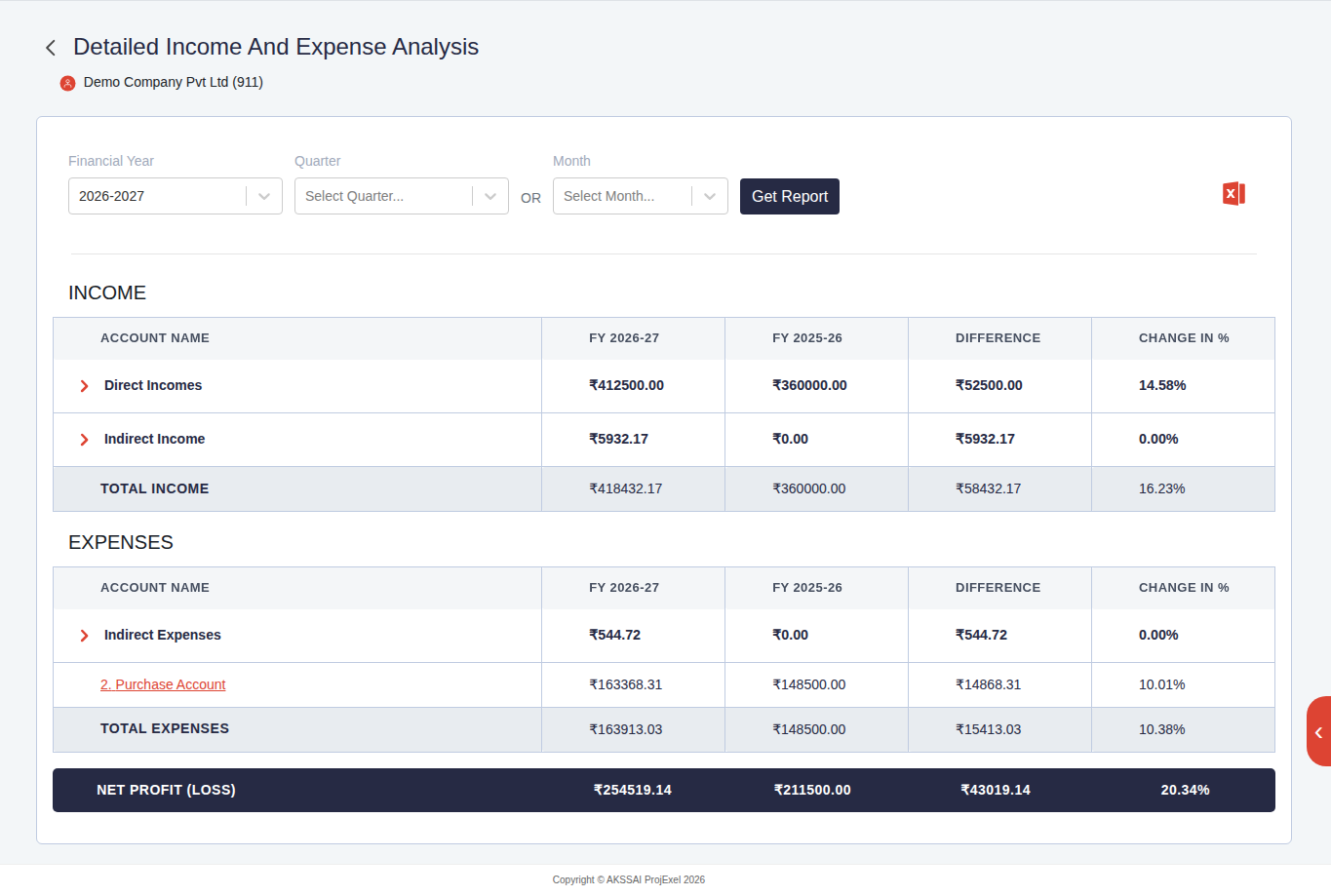
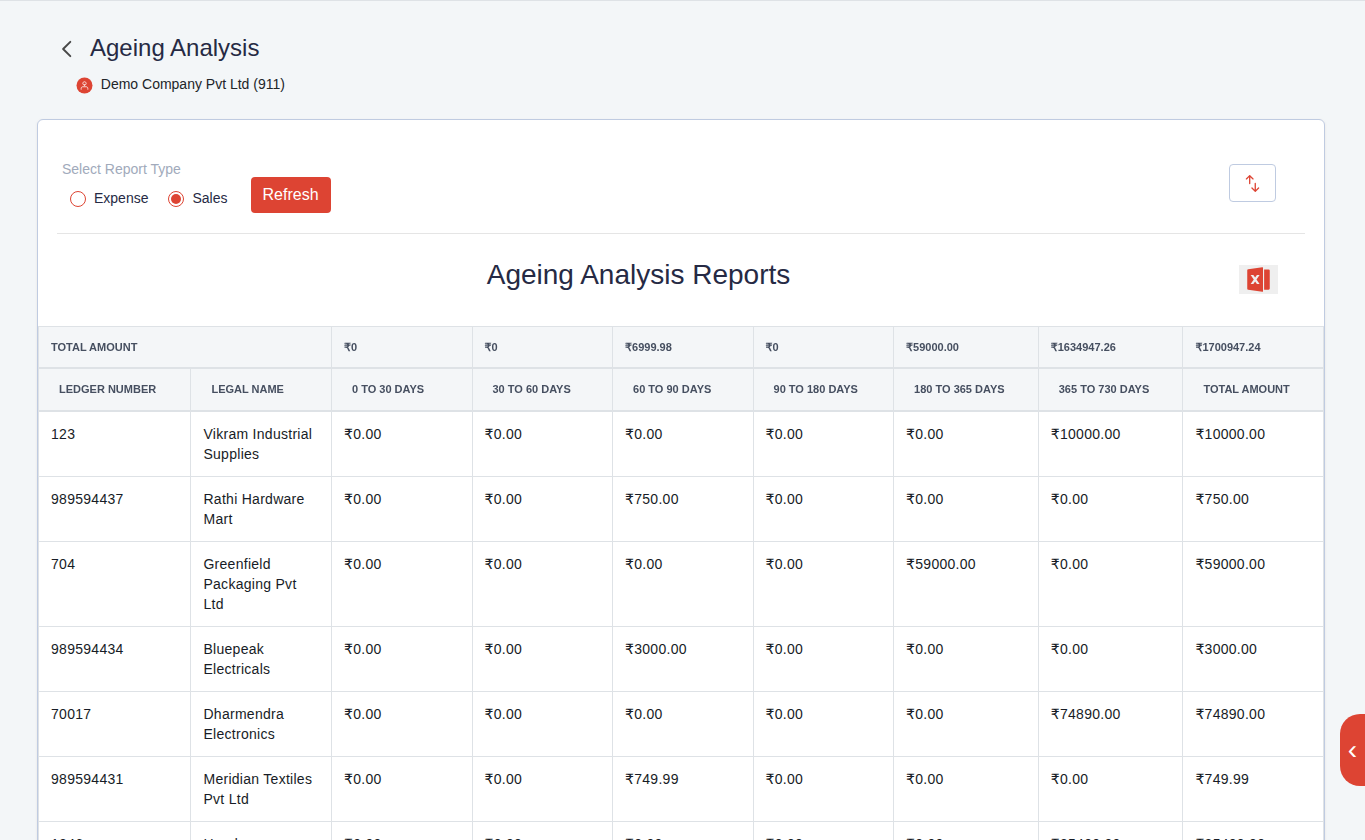
What management should see on the close day
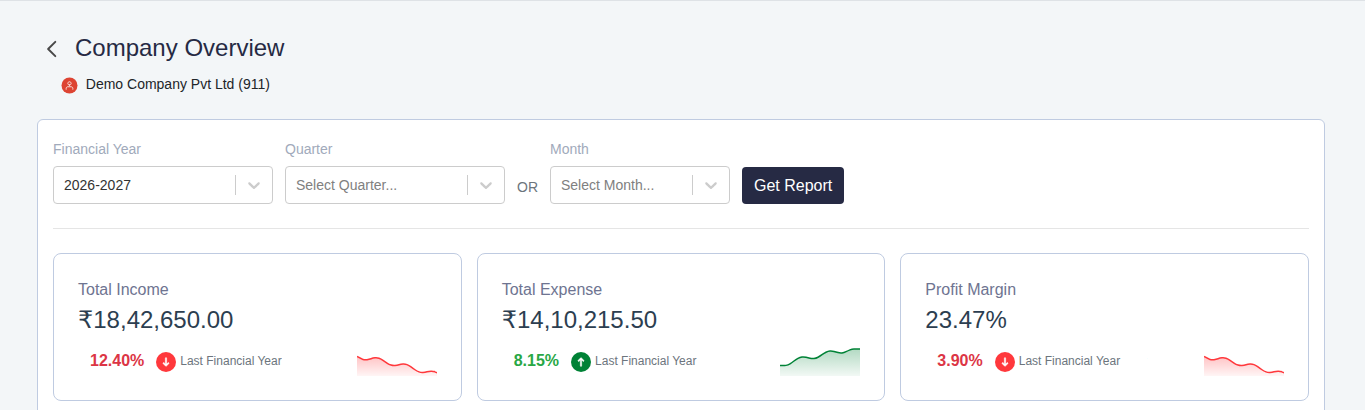
One document, three questions answered: what moved, where cash stands, and where the company stands.
What moved and why
P&L against last month and budget, with three to six lines of commentary on the variances that matter. Written by the person who closed the books.
Cash and what is coming
Bank balances reconciled, receivables and payables by name and age, and in the higher bands a 13-week cash forecast.
Where the company stands
Balance sheet with every line reconciled, compliance status for GST, TDS, payroll and Registrar filings, and open items with owners.
A close needs a process, and most accounting arrangements do not have one
Books written up after the fact cannot close on a date. Documents collected at month end arrive late, reconciliations wait for the audit, and the numbers keep changing until March. Finac reverses the order: the bank is posted within 24 hours, bills are captured as they arrive, every request to you carries a date, and the checklist is signed before the period locks.
- Books within 24 hours of the bank, every working day
- Open items requested with a date, so the close never waits on a chat thread
- Period lock after sign-off; later adjustments dated and explained in the next month
- The same checklist for every client, reviewed by a second person before the pack goes out

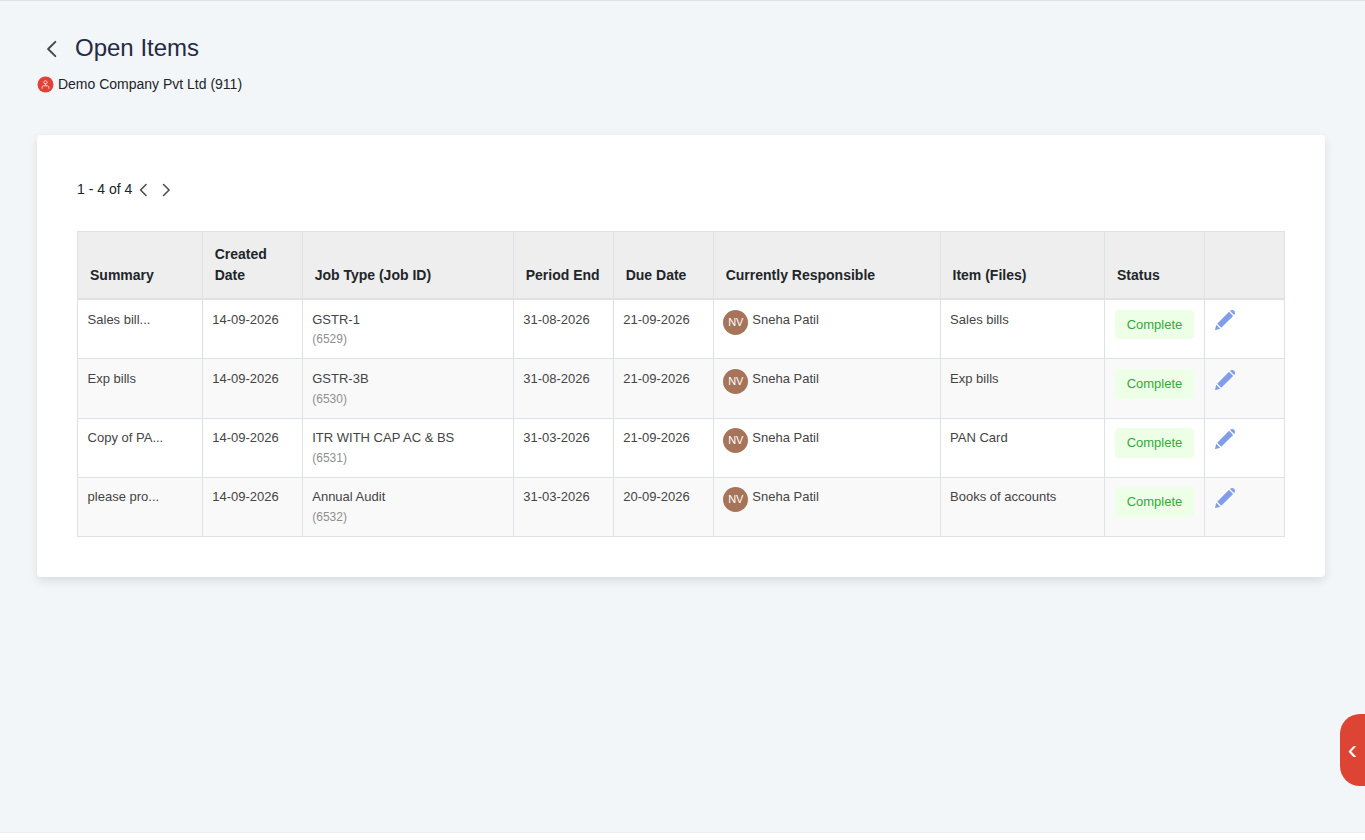
Frequently asked
What does ‘working day 5’ mean in practice?
Five working days after the last day of the month, every bank account is reconciled, suspense is at zero or explained, sales and purchases are complete with accruals, GST and TDS agree to the returns, payroll is booked, and the pack is with you. For a March month end that is the fifth working day of April. Bands set the day: 10 in Foundation, 7 in Growth, 5 in Established, 3 to 5 in Complex and CFO.
Why can’t our current accountant close on a date?
Usually because the books are written up after the fact, from documents collected late, and reconciled only at the year end for the audit. A close needs the bank posted within a day, bills captured as they arrive, and a checklist someone signs off. That is a process, and it is what Finac sets up in the first month.
What is in the monthly pack?
A profit and loss against last month and budget, a balance sheet with every line reconciled, cash position and a cash forecast in the higher bands, receivables and payables ageing with the names that matter, a compliance status line, and a short commentary on what moved and why. One document, sent on the close day.
Do you close the books or just prepare a report?
Close them. A period is locked once the checklist is signed off, so the numbers you saw are the numbers the auditor sees. Adjustments after the lock are dated and explained in the next month, never slipped into a closed period.
Can you close on our parent’s calendar?
Yes. Foreign-owned subsidiaries and group companies close on the group’s timetable, in the parent’s currency and format where needed, with intercompany agreed on both sides before the pack goes out. See India entry for the full picture.
What if we are behind by several months?
The first engagement month is a catch-up close: every open month is brought to the same standard in sequence, oldest first, and the current month closes on its own date from then on. The catch-up is scoped and priced separately from the monthly fee.
Find out which working day your month would close on
Eighteen questions, two minutes. Your close day and what the pack carries are stated in the proposal. Finac engagements start at ₹6,999 a month and rise with the work.
Finac is the outsourced finance department for growing Indian businesses, run by AKSSAI ProjExel Private Limited, a professional services firm of qualified accountants, tax and compliance specialists, many of whom have worked at MNCs and Big Four firms. Our teams work from Bangalore, Jaipur, Noida, Jabalpur, Bhopal and Indore, and we serve clients in the USA, UK, Taiwan and Australia remotely. Fees exclude GST. Close days are working days after the month end and are stated in each proposal. Screens shown are from a demonstration company on the Finac platform. Reviewed 24 September 2026.