



A seller’s books are harder than a shop’s. Most are kept as if they were the same.
Revenue arrives as settlements that net out fees, returns and tax. Stock sits in warehouses in states where you have never been. The marketplace’s reports, the GST portal and the bank rarely agree without work. Finac runs settlements, TCS, multi-state GST, stock and margin by SKU as one finance function, from ₹10,000 a month.
Seven lines in every settlement, each booked differently
A settlement is a statement, not a sale. Book the net receipt as revenue and everything downstream is wrong: margin, GST, TCS and the stock count.
| Line in a settlement | What it is | How it is booked |
|---|---|---|
| Gross sales | Orders shipped in the period | Revenue by the GSTIN of the fulfilling state, with GST at the product’s rate |
| Returns and refunds | Customer returns, return to origin, refunds | Credit notes; stock back into inventory, or written off where damaged |
| Marketplace fees | Referral, closing, fulfilment, storage, advertising | Expenses with GST; input credit claimed against the operator’s invoice, matched to 2B |
| Shipping | Charged to the customer or borne by you | Revenue or expense; GST follows the underlying supply |
| TCS under GST | 0.5 percent of net taxable value collected by the operator | Receivable, accepted on the portal monthly, set against the GST liability |
| TDS on e-commerce | 0.1 percent of gross sales deducted by the operator | Advance tax credit, reconciled to the annual information statement |
| Adjustments and reserves | Reimbursements, chargebacks, held amounts, promotions | Tracked per order, aged, claimed from the operator where due |
Six things we find in the first month of a seller’s books
Settlements booked as revenue
The net amount received is posted as sales. Revenue is understated, fees and GST credit on them are never recorded, and the GST return disagrees with the marketplace’s TCS statement.
Returns that never come back to stock
Returned units are refunded in the books but not received in inventory, or received and never valued. Stock counts drift from the system by hundreds of units.
TCS left unclaimed
The operator’s TCS sits on the portal unaccepted for months. Cash paid twice for the same liability.
Fees without credit
Referral and advertising invoices from the marketplace carry GST that is never matched. At scale it is the single largest missed credit.
Stock in a state with no registration
A fulfilment centre opened in a new state, stock shipped, no registration taken. The supply is taxed under the wrong GSTIN and the e-way bill trail does not hold.
Margin by SKU unknown
Advertising, returns and storage are booked in total. The product that loses money on every order is subsidised by the one that makes it, and nobody can see which is which.
From order value to what a product actually earns
Each step is a line in the settlement or an invoice from the operator. Booked per order, the waterfall comes out of the ledger for every SKU, channel and month.
Your stock decides where you are registered
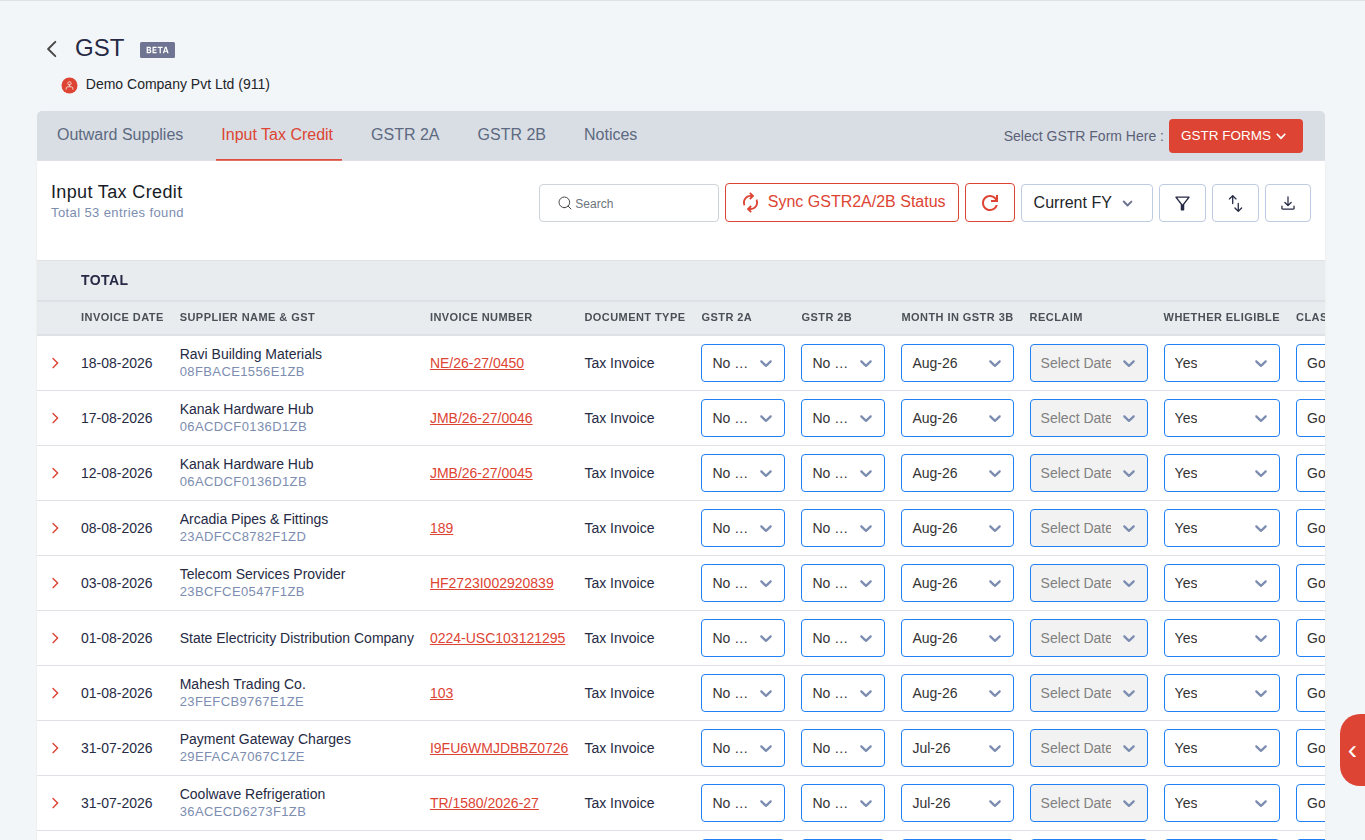
Goods in an operator’s fulfilment centre make that state a place of business. Each one carries a registration, its own returns and document series, and e-way bills for stock moving in. Sales from that warehouse are that state’s supply, and stock sent there from your own godown is a taxable transfer between your registrations.
- Registrations taken before stock ships to a new state, with the operator’s warehouse as the additional place of business
- Stock transfers invoiced between GSTINs at the right value, credit claimed on the receiving side
- GSTR-1 and 3B for every registration reconciled to the operator’s state-wise sales report
- TCS accepted on the portal for each GSTIN each month and set against that state’s liability

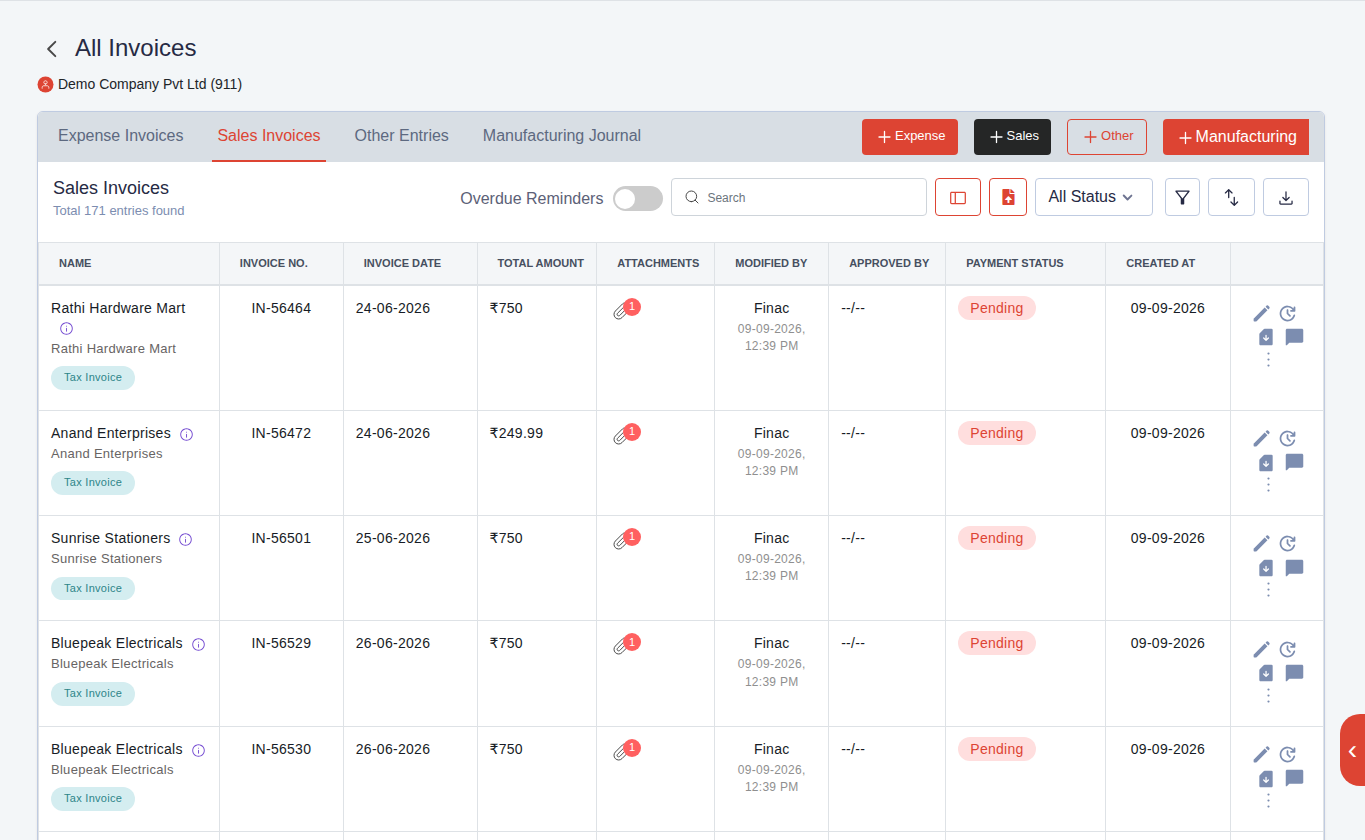
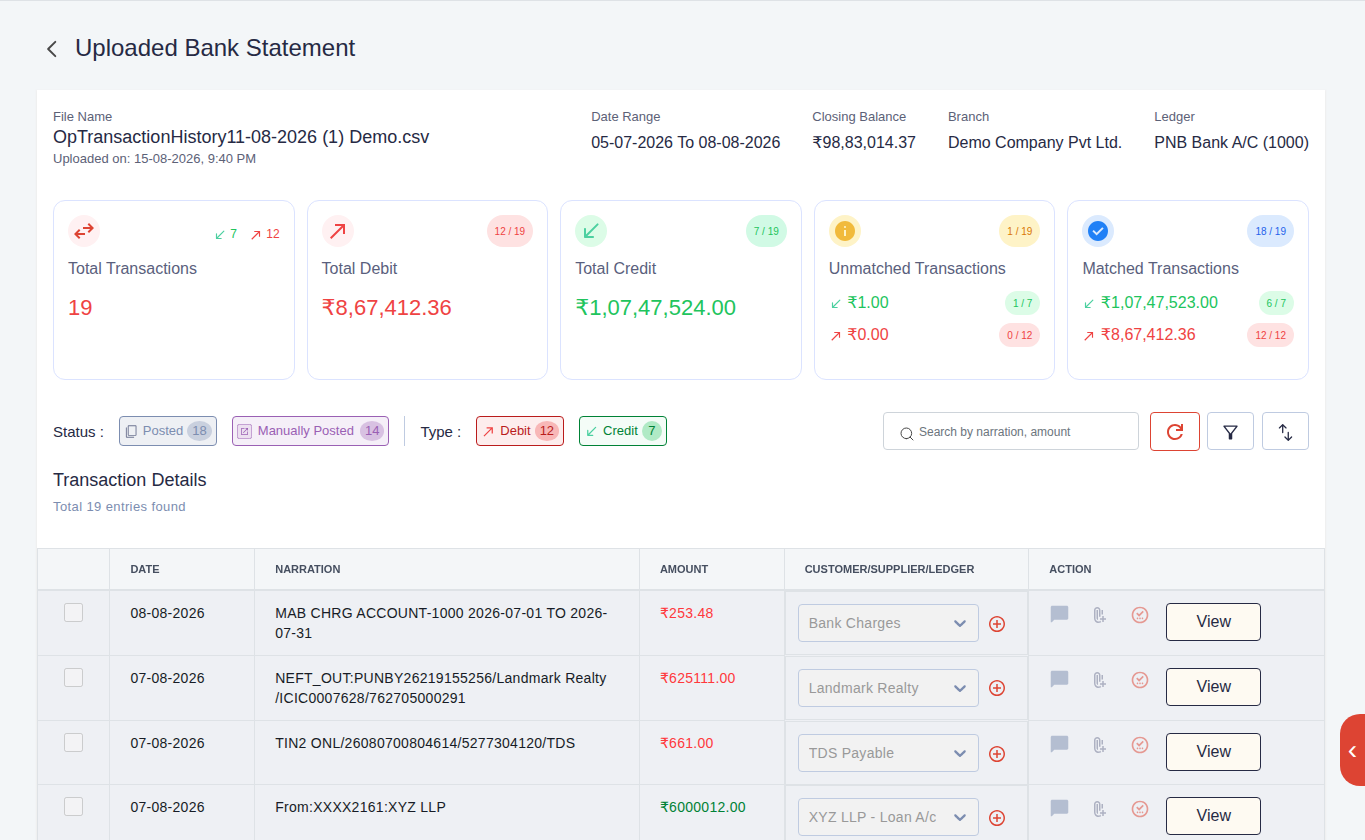
Shopify, WooCommerce and the gateway
Orders from your store, payouts from Razorpay, PayU or Cashfree net of gateway charges and GST, COD remittances from the courier, and returns through your own warehouse. The same order-level booking, one channel more.
Frequently asked
Which marketplaces and channels do you reconcile?
Amazon, Flipkart, Meesho, Myntra, Nykaa, JioMart and the quick-commerce platforms, plus Shopify, WooCommerce and your own website with Razorpay, PayU or Cashfree behind it. Each channel’s settlement report is read in its own format and booked order by order.
How is TCS under GST handled?
The operator collects 0.5 percent of the net taxable value on each sale and deposits it against your GSTIN. It appears in your electronic cash ledger once you accept it on the portal each month. Finac reconciles the operator’s TCS statement to the settlement, accepts the credit, and uses it against the month’s GST liability, so it never sits unclaimed.
Do we need GST registration in every state where a fulfilment centre holds our stock?
Yes, where the operator’s warehouse holds your goods. Each such state is an additional place of business under a registration in that state, and the sale from that warehouse is that state’s supply. Stock sent there is a taxable transfer between your own registrations. Finac handles the registrations, the returns and the e-way bills for each.
Can you tell us which products make money?
Yes, and that is the point of the exercise. Revenue net of returns, marketplace fees, shipping, advertising and payment charges is booked per order, so margin by SKU, by channel and by month comes out of the books rather than a spreadsheet built once a quarter.
What does it cost for a marketplace business?
Growth and above. The volume of orders, the number of channels and the number of states carry it upward. A single-channel D2C brand with one warehouse sits in Growth; a multi-marketplace seller with fulfilment stock in four states is Established or Complex. Two minutes on the scoping flow tells you which applies to you.
See what Finac would cost for your channels
Eighteen questions, two minutes. Marketplaces, states and order volume all count. Finac engagements start at ₹6,999 a month and rise with the work.
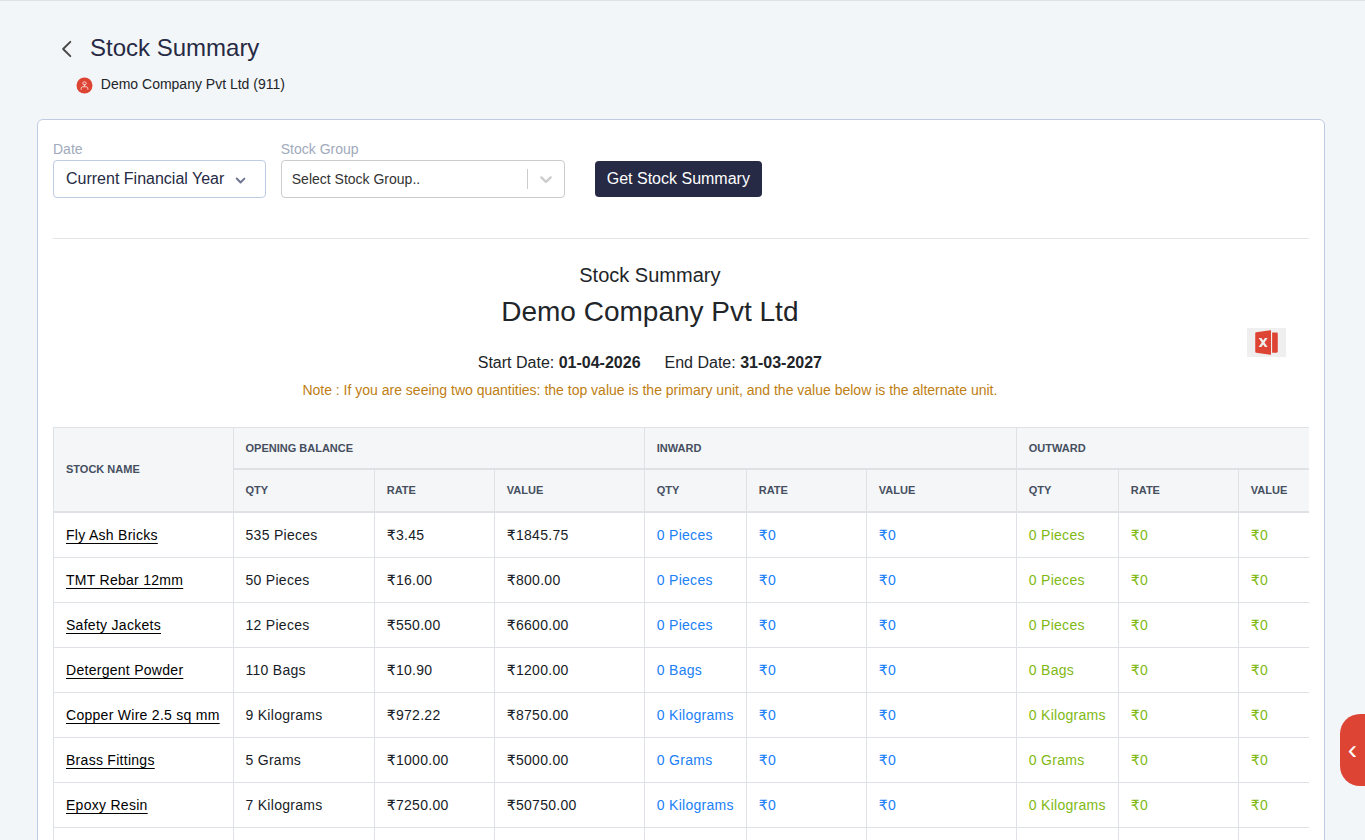
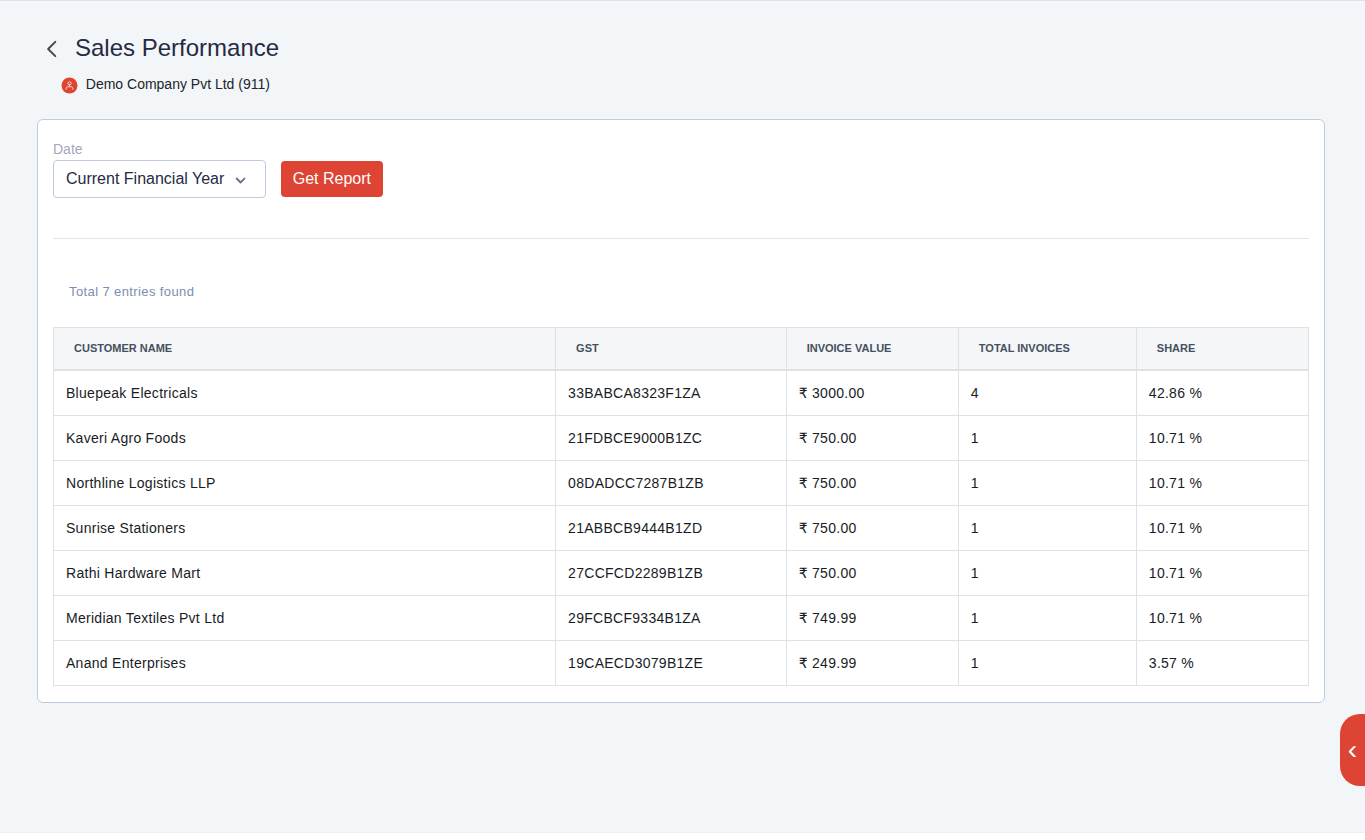
Finac is the outsourced finance department for growing Indian businesses, run by AKSSAI ProjExel Private Limited, a professional services firm of qualified accountants, tax and compliance specialists, many of whom have worked at MNCs and Big Four firms. Our teams work from Bangalore, Jaipur, Noida, Jabalpur, Bhopal and Indore, and we serve clients in the USA, UK, Taiwan and Australia remotely. Fees exclude GST. Rates and rules summarised as in force on the review date under the CGST Act 2017 and the Income-tax Act 2025. Marketplace names are those of their owners and are used only to describe the channels reconciled. Screens shown are from a demonstration company on the Finac platform. Reviewed 24 September 2026.