




GST is where a finance department earns its fee every month
The returns are routine. What is not routine is keeping input credit intact, keeping several registrations in step, and never hearing about a problem from a notice. This is how GST runs inside a Finac engagement, and the 2026 rules that changed the job.
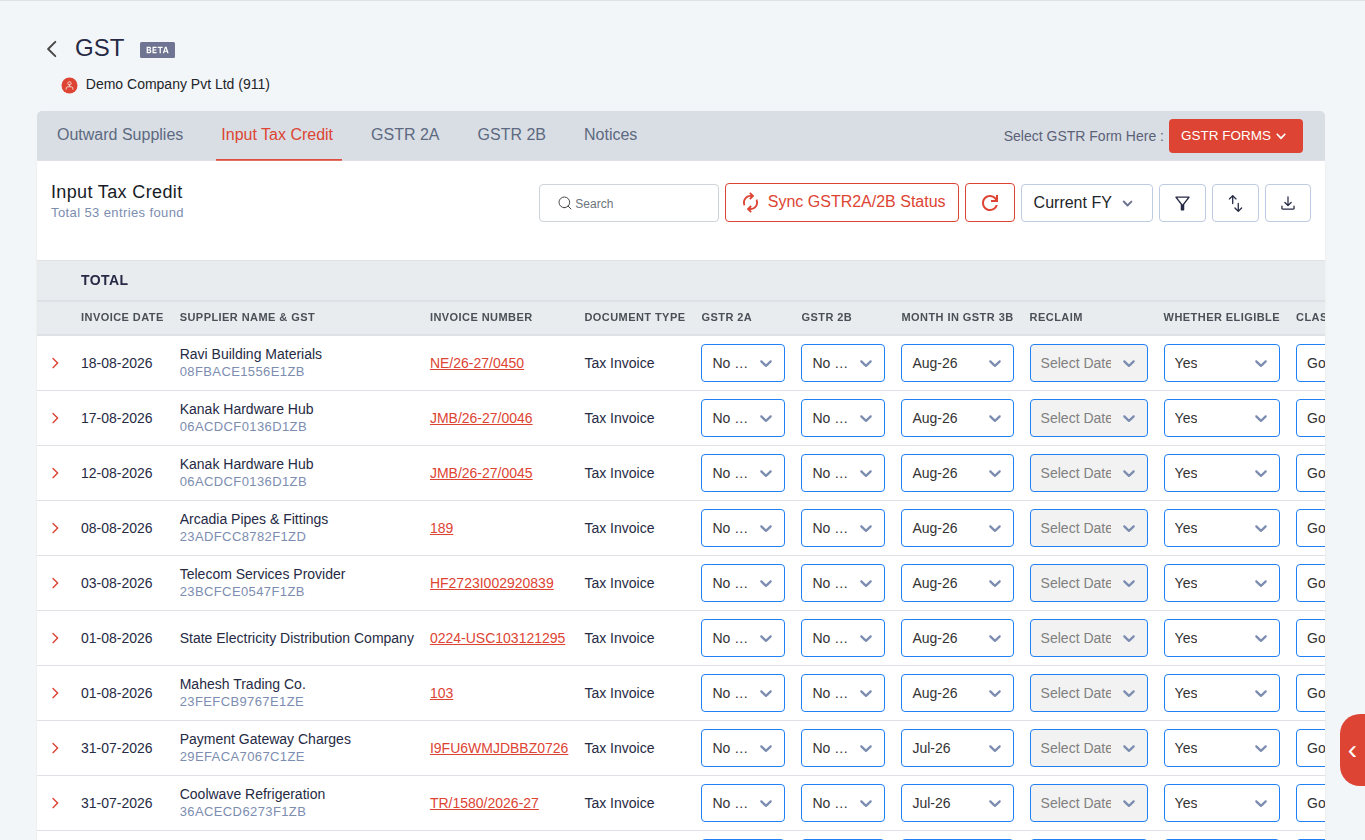
Six habits, and the returns file themselves
GST goes wrong between the dates, not on them. A return filed from reconciled books is a formality. A return filed from the portal’s figures is a future notice.
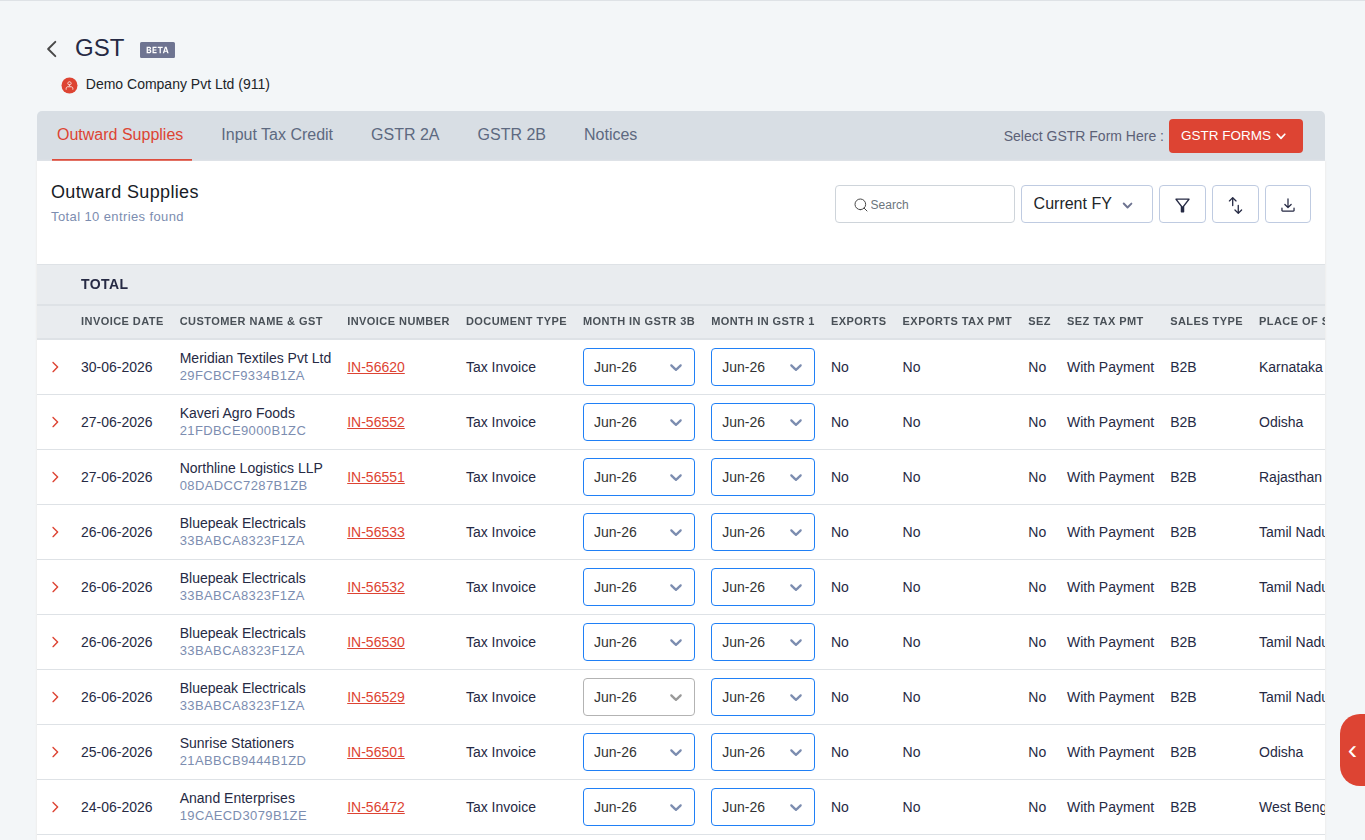
Invoices right first timePlace of supply, rate, HSN and document series checked at issue. E-invoices reported to the IRP where turnover requires it.
2B against the purchase registerEvery purchase bill matched to GSTR-2B. Supplier GSTIN status checked. Mismatches chased while the supplier still remembers the invoice.
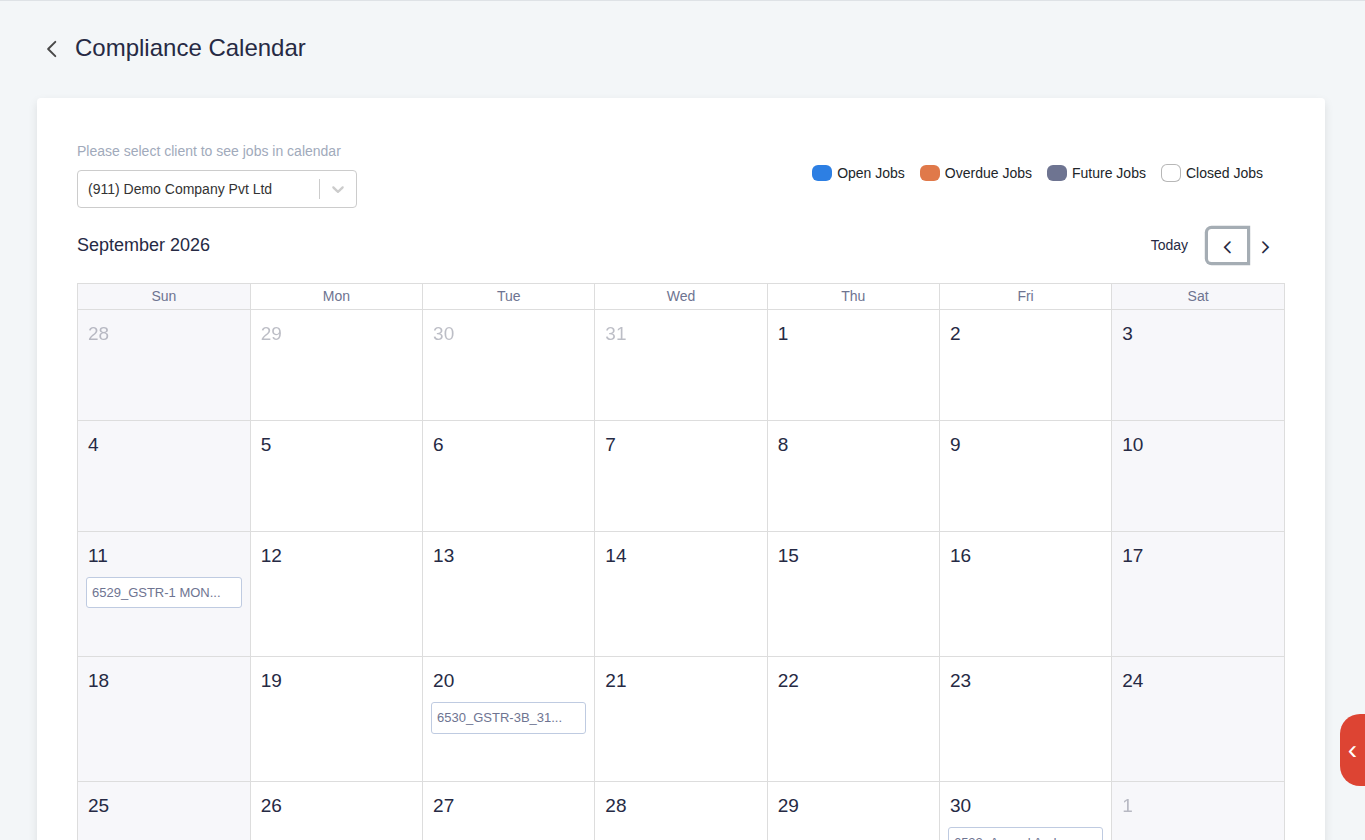
GSTR-1 filed from the booksOutward supplies filed from the sales register, so the auto-populated 3B liability is already right. QRMP filers: the invoice furnishing facility where useful.
GSTR-3B with paymentLiability from the books, credit from the reconciled 2B, cash ledger checked, paid and filed. QRMP: PMT-06 monthly, 3B after the quarter.
Returns to books to income taxTurnover in the returns agreed to the books and to the income-tax figures. Credit ledger reviewed. Refund claims filed where exports or inverted duty apply.
GSTR-9, 9C and the LUTAnnual return by 31 December above ₹2 crore, reconciliation statement above ₹5 crore. Letter of undertaking renewed before the first export invoice of April.
Six ways businesses lose input credit
In the books Finac takes over, blocked, missed and wrongly claimed credit is the most common finding. Each of these is caught before the return is filed.
Credit claimed too early
Bills booked and credit claimed before the supplier files. The return is now blocked or the credit reversed with interest at 18 percent.
Blocked credit claimed
Credit on employee food, motor cars, club fees and construction is blocked by law. Claimed by habit, reversed on audit with interest.
Credit never claimed
Bank charges, software subscriptions, insurance and reimbursed expenses carrying GST that nobody matched. The cut-off is 30 November after the year end, and then it is gone.
Wrong place of supply
An inter-state supply taxed as intra-state, or the reverse. Tax paid under the wrong head has to be paid again under the right one and reclaimed.
Reverse charge missed
Legal fees, imported services, freight from a goods transport agency, security services. Tax due from the recipient, payable in cash, then creditable.
Series and registrations out of step
A document series reused across GSTINs, an e-invoice threshold crossed unnoticed, a warehouse in a state with no registration.
The 2026 rules that made GST a monthly discipline
The portal now enforces what it used to flag. Each of these moved work from after the return to before it.
GSTR-3B no longer accepts credit above the GSTR-2B balance or liability below the auto-populated figure. The return is blocked in real time, so the reconciliation has to happen before the 20th, not after.
A return more than three years past its due date can no longer be filed, and the credit in it is lost. The portal has enforced this since December 2025.
Businesses at ₹10 crore and above must report invoices to the IRP within 30 days of the invoice date or the IRN is refused. E-invoicing itself applies from ₹5 crore.
Every inward invoice is accepted, rejected or kept pending on the portal before 2B is drawn. Left untouched, it is deemed accepted, including the wrong ones.
Common input services received at a head office for several GSTINs must be distributed through an Input Service Distributor registration, with its own monthly return.
Most goods and services now sit at 5 or 18 percent, with a 40 percent rate on demerit goods. Old rates on stock, contracts and price lists had to be reset, and credit on the transition reviewed.
Invoice, credit note and debit note series restart every 1 April and are unique per registration, not per PAN. A shared series across states is a defect the portal now catches.
Credit for a financial year can be claimed only until 30 November following it or the annual return, whichever is earlier. Everything unmatched by then is a cost.

A notice should be an afternoon’s work
Most GST notices in 2026 are system-generated mismatches between GSTR-1, 3B and 2B. When the returns were filed from reconciled books, the reply is the reconciliation itself. Finac reads every notice the day it arrives, traces each figure and files the reply with the working attached.
What GST looks like at each scale
Every band includes GST. What grows is the number of registrations, the refund and credit positions to manage, and the notices to answer.
| Area | Single registration | Multi-state and exporters | Groups |
|---|---|---|---|
| Registrations | One GSTIN, standard or QRMP cycle | Several GSTINs across states; e-commerce operator TCS; LUT and export refunds; ISD | Group of entities; SEZ units; casual and non-resident registrations; advance rulings |
| Monthly | GSTR-1 and 3B from the books; weekly 2B match; IMS actions; payment by the 20th | Everything in Foundation for each GSTIN; stock transfers between registrations; refund applications; TCS credit reconciled | Everything in Growth; group credit position; intercompany cross-charge with GST; state-wise MIS |
| Annual | GSTR-9 where it applies; LUT renewal; ITC cut-off review in November | GSTR-9 and 9C; departmental audit support; turnover agreed to the income-tax return | Everything in Growth; audit committee reporting; tax position papers |
| Notices | System mismatch notices answered from the reconciliation | Scrutiny and audit notices; personal hearing represented | Appeals coordinated with counsel; litigation tracker |
| Band | Foundation, ₹6,999 to ₹9,999 a month | Growth, ₹10,000 to ₹19,999 a month | Established and Complex, ₹20,000 to ₹75,000 a month |
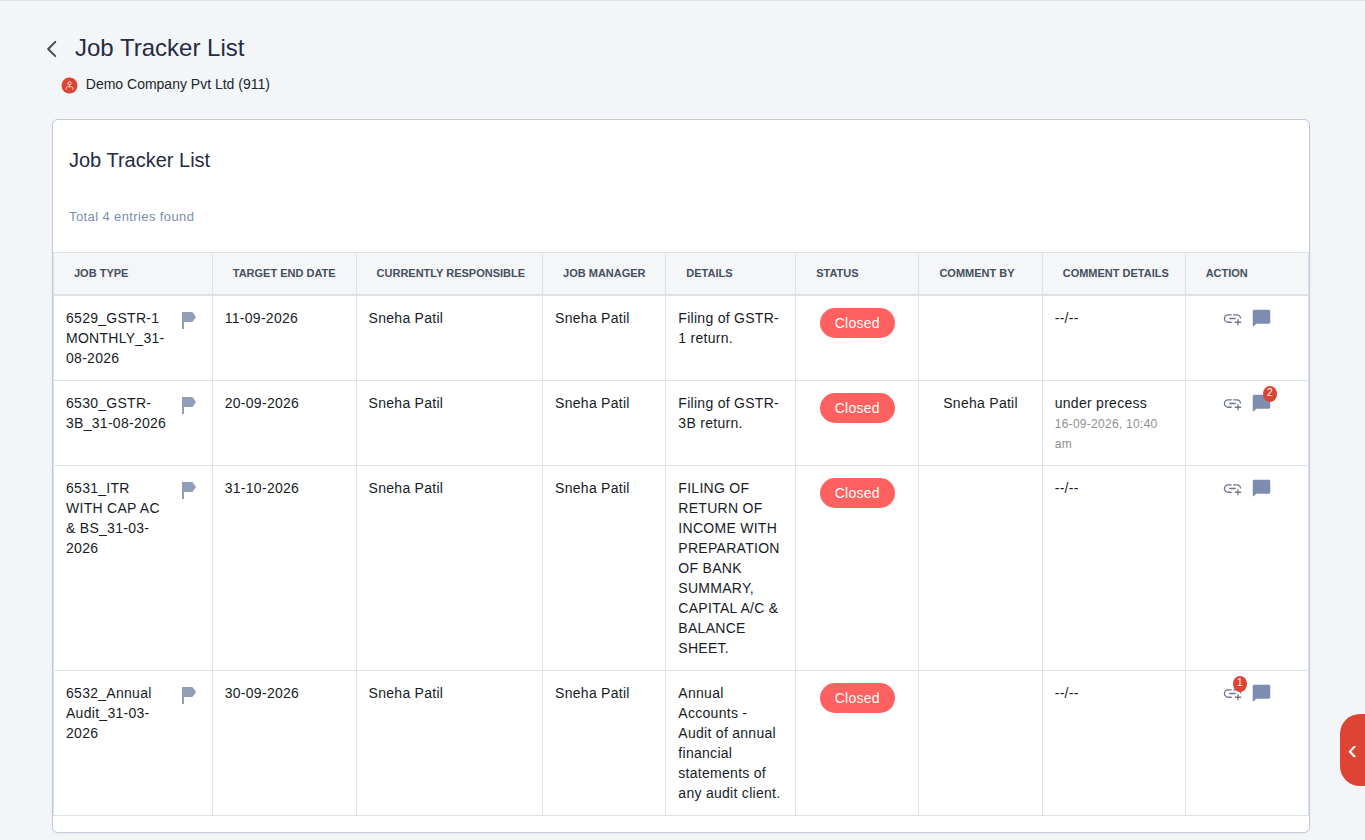
Coming from another accountant
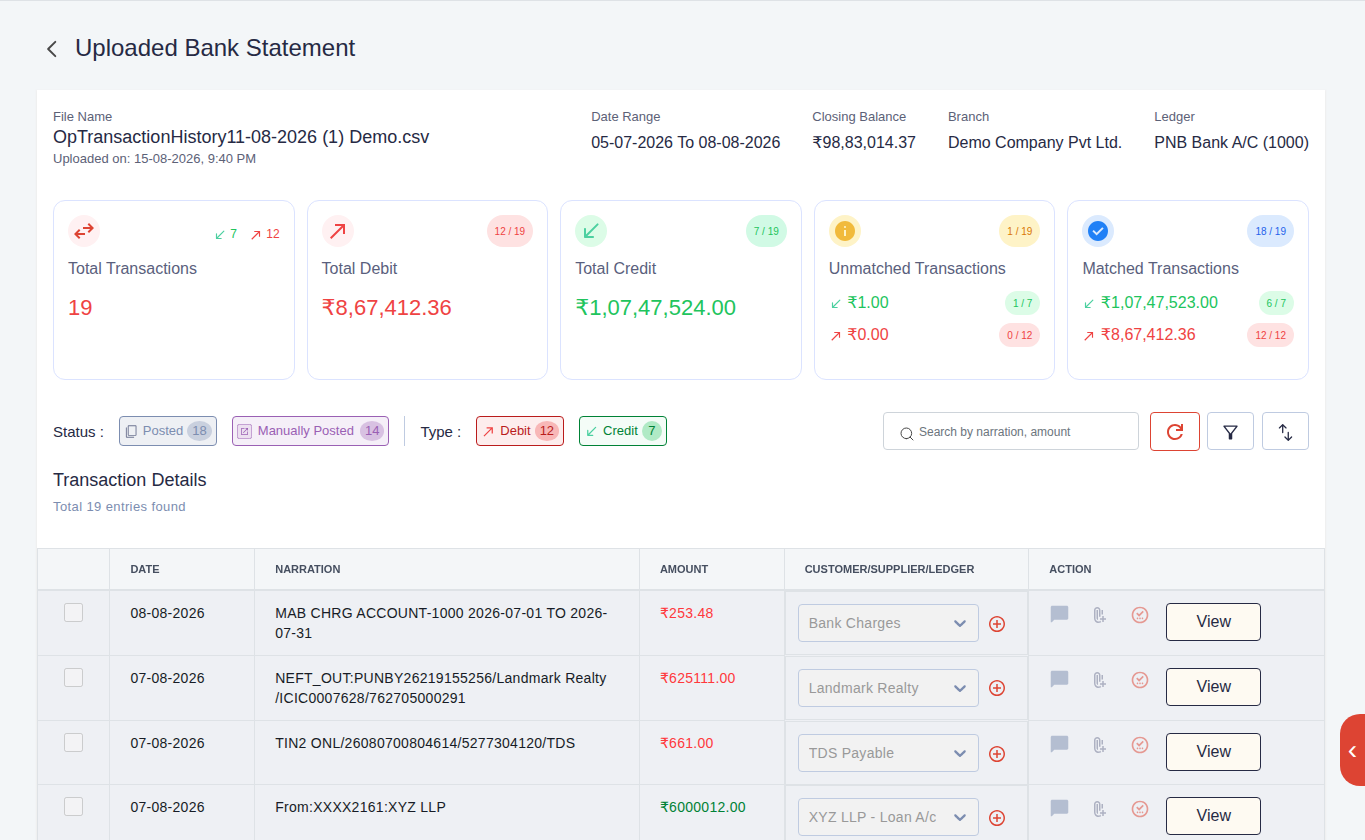
Finac starts with a credit-ledger review: what was claimed, what was blocked, what is unmatched and still claimable before 30 November, and which suppliers are the recurring problem. The findings go to you before the first return is filed.
Frequently asked
Does Finac file the returns, or do we?
Finac prepares, reconciles and files. GSTR-1 and GSTR-3B are filed from the books, not from the portal’s auto-populated figures, and the reconciliation to GSTR-2B is done before filing, not after a notice. You approve the liability each month; the filing itself is Finac’s job.
What happens to input credit on a supplier who has not filed?
It is not available until the supplier files, and under the validations in force since January 2026 the return will not go through with it claimed. Finac compares GSTR-2B with the purchase register every week, so the supplier is chased while the invoice is fresh. Credit on a cancelled or non-filing supplier is flagged before it is claimed, never reversed with interest afterwards.
We are on the QRMP scheme. What changes?
GSTR-1 becomes quarterly with an optional invoice furnishing facility in months one and two, GSTR-3B becomes quarterly, and tax is paid monthly through PMT-06 by the 25th. Finac sets the cycle at onboarding and moves you off QRMP when turnover or customer expectations make monthly filing the better choice.
We have GSTINs in more than one state. Is that extra?
Multi-GSTIN is part of your scope, with no surcharge. Each registration carries its own returns, its own document series and its own credit ledger, and stock transfers between them are taxable supplies. Finac keeps them aligned so the total across states agrees with the books and with the income-tax turnover.
What does Finac do when a notice arrives?
Reads it the same day, traces every figure to the books and the returns, drafts the reply with the reconciliation attached, and files it within the time allowed. Most notices in 2026 are system-generated mismatches between 3B, 1 and 2B. A business whose returns were filed from reconciled books answers them in an afternoon.
From which band is GST included?
Every band. Foundation from ₹6,999 a month covers a single GSTIN on the standard or QRMP cycle. Multi-state, e-commerce operators, exports with refunds and ISD sit in Growth and above. The scoping flow places the business.
See what GST looks like inside a Finac engagement
Eighteen questions, two minutes. Registrations, states, exports and marketplaces all count. Finac engagements start at ₹6,999 a month and rise with the work.
Finac is the outsourced finance department for growing Indian businesses, run by AKSSAI ProjExel Private Limited, a chartered-accountancy-led firm with offices in Jabalpur, Bhopal, Noida and London. Fees exclude GST. Rules summarised as in force on the review date under the CGST Act 2017 and the notifications made under it; each business is advised on its own facts. Screens shown are from a demonstration company on the Finac platform. Reviewed 24 September 2026.